
Garden lighting that looks as good as it works
Plan beautifully layered outdoor lighting that improves visibility, highlights planting and architectural features, and withstands British weather. A practical guide from your local electrical contractor.
Explore lighting designRequest an estimateGood landscape lighting does more than flood a space with brightness. Thoughtfully positioned, warm, controlled light creates depth and makes paths, steps, entertaining areas and favourite garden features more welcoming after dark.
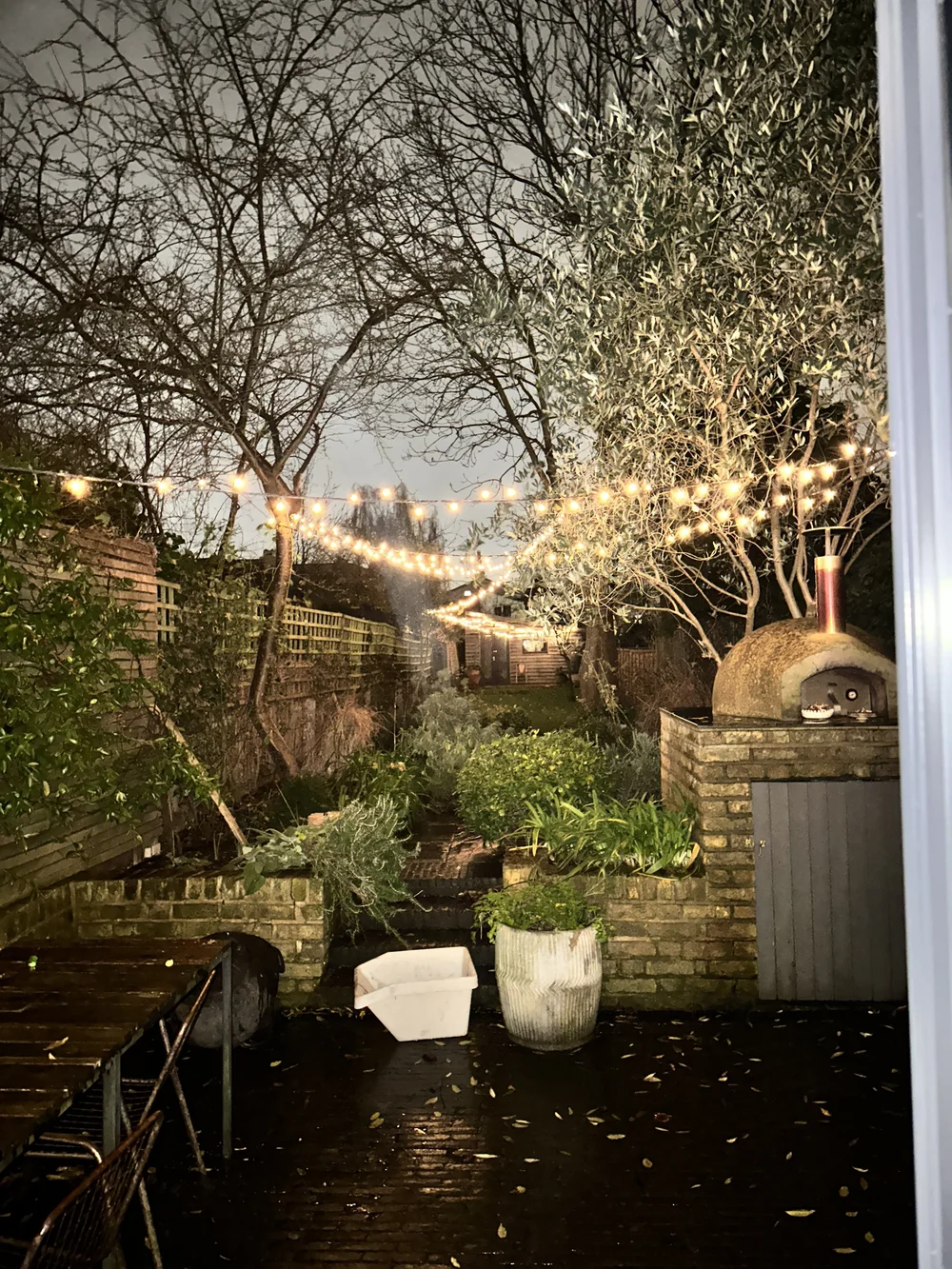
Six design principles for better garden lighting
1. Layer light, rather than flooding the garden
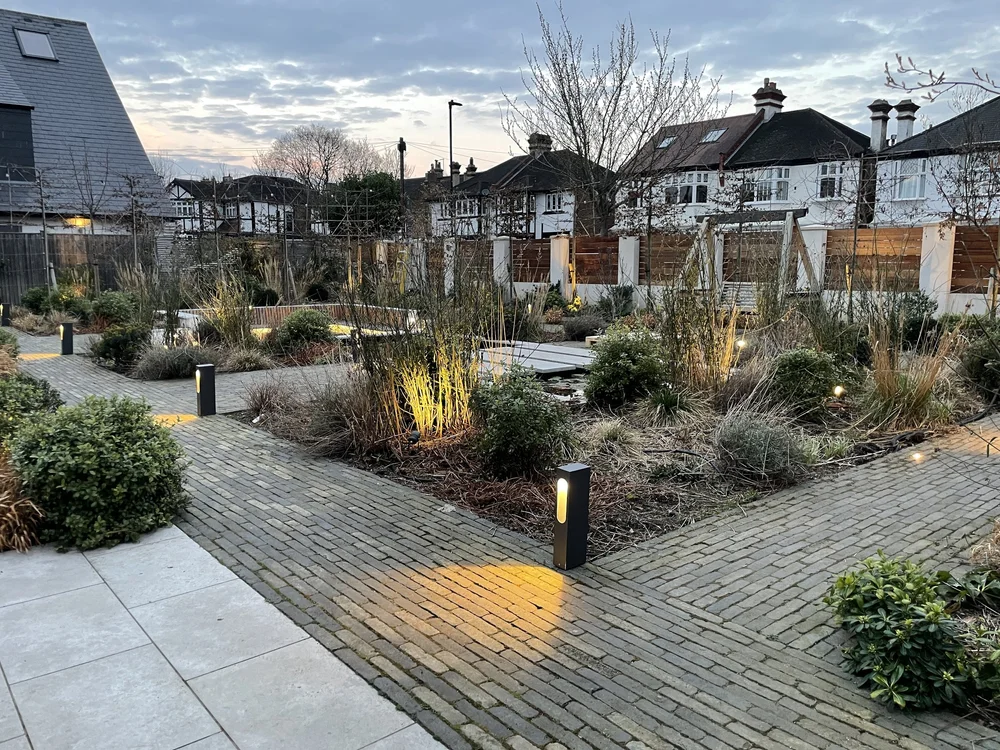
Combine discreet path or step lighting with selected feature lights and soft illumination for terraces. This creates separate focal points and avoids the flat appearance of too many powerful floodlights.
Consider how the garden looks from inside the house as well as outside.
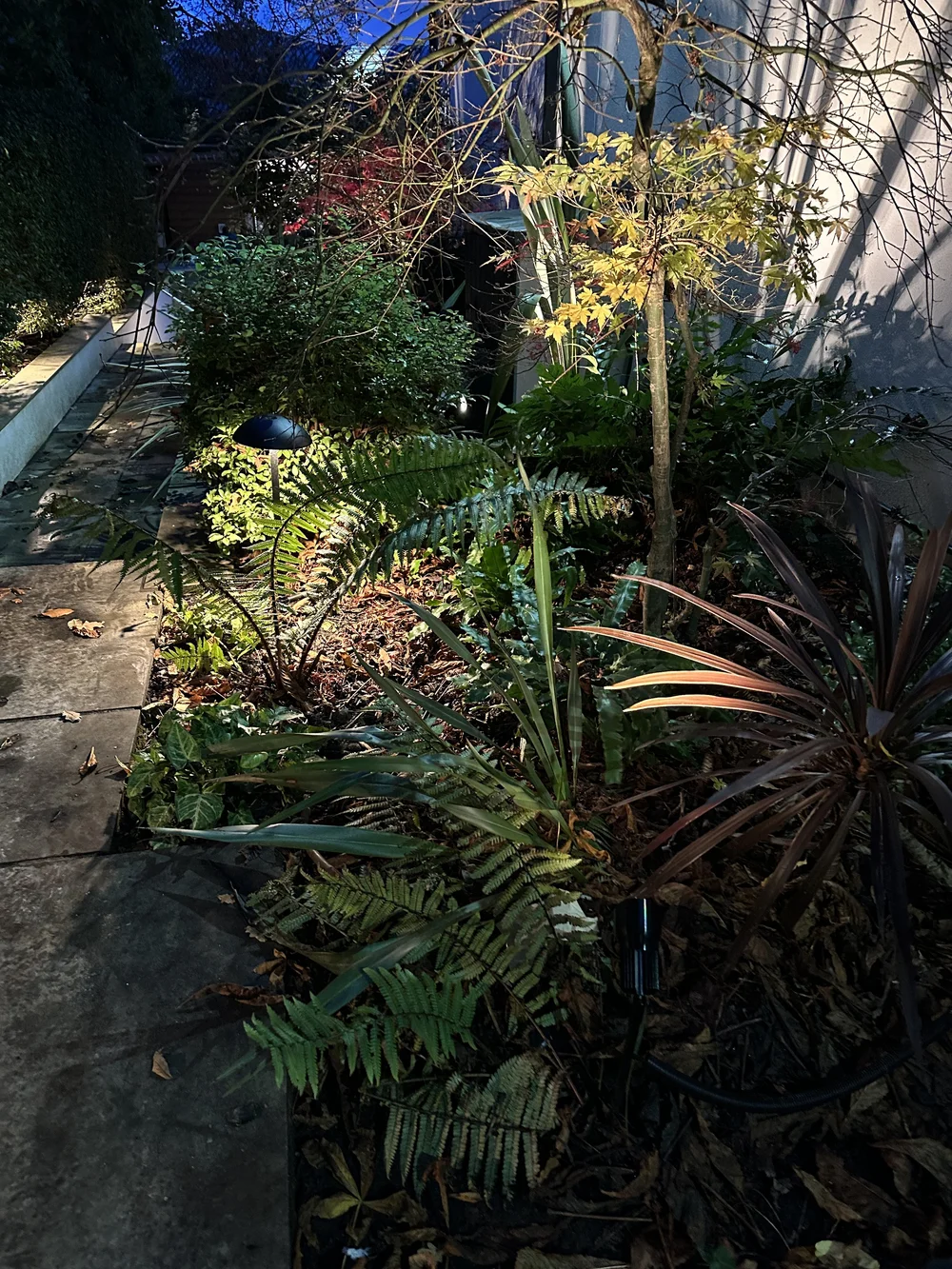
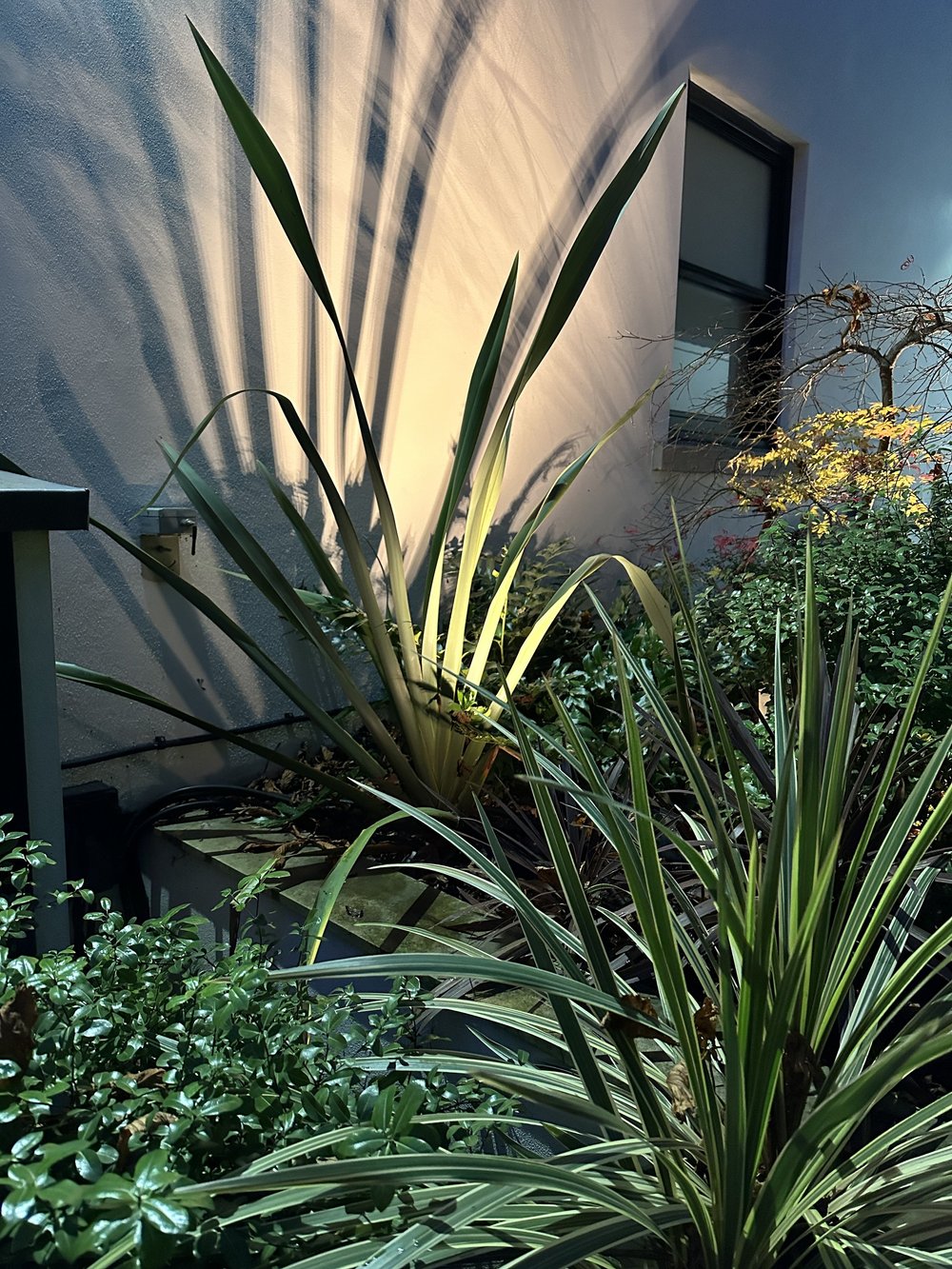
2. Choose warm light and control glare
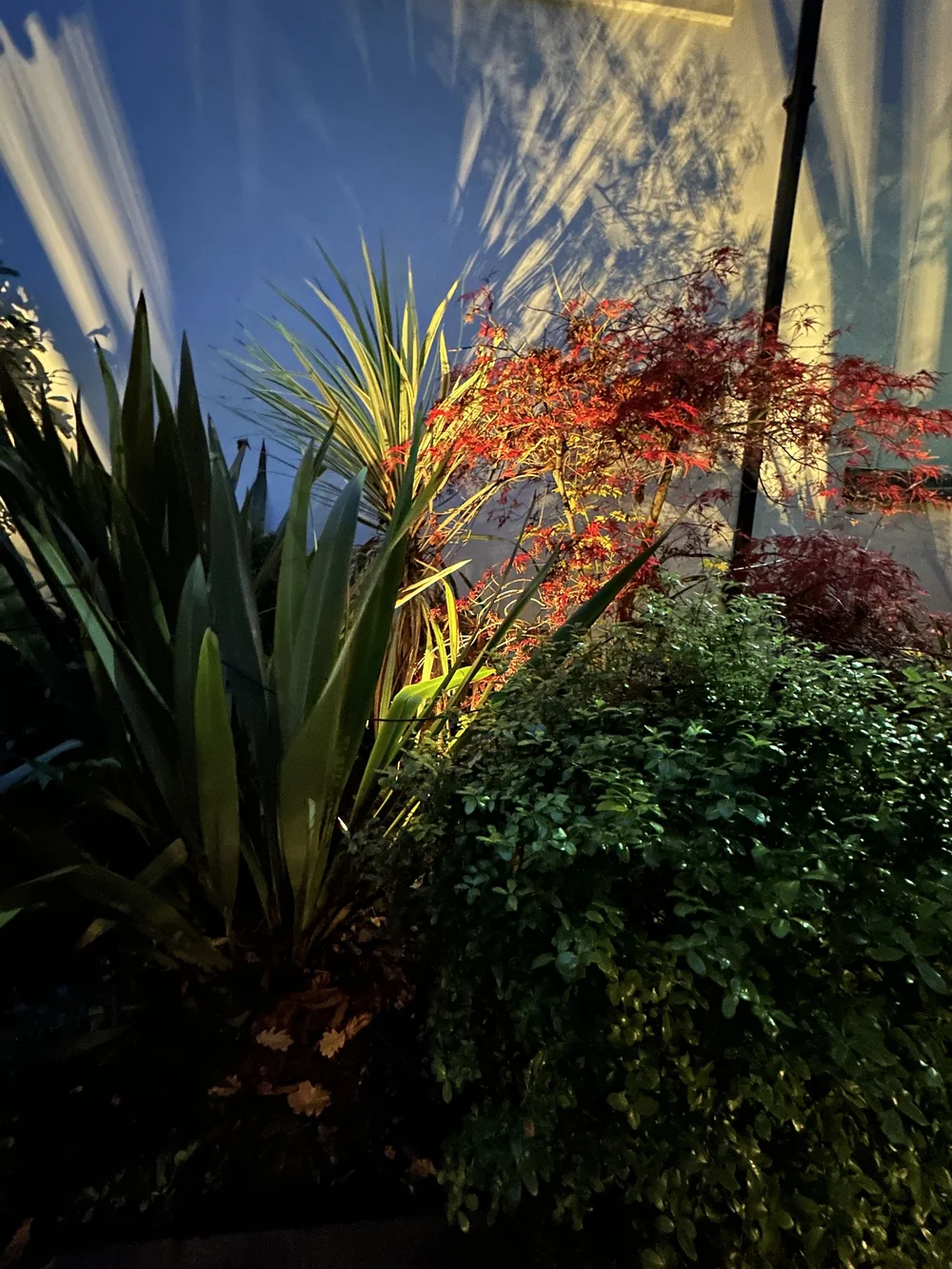
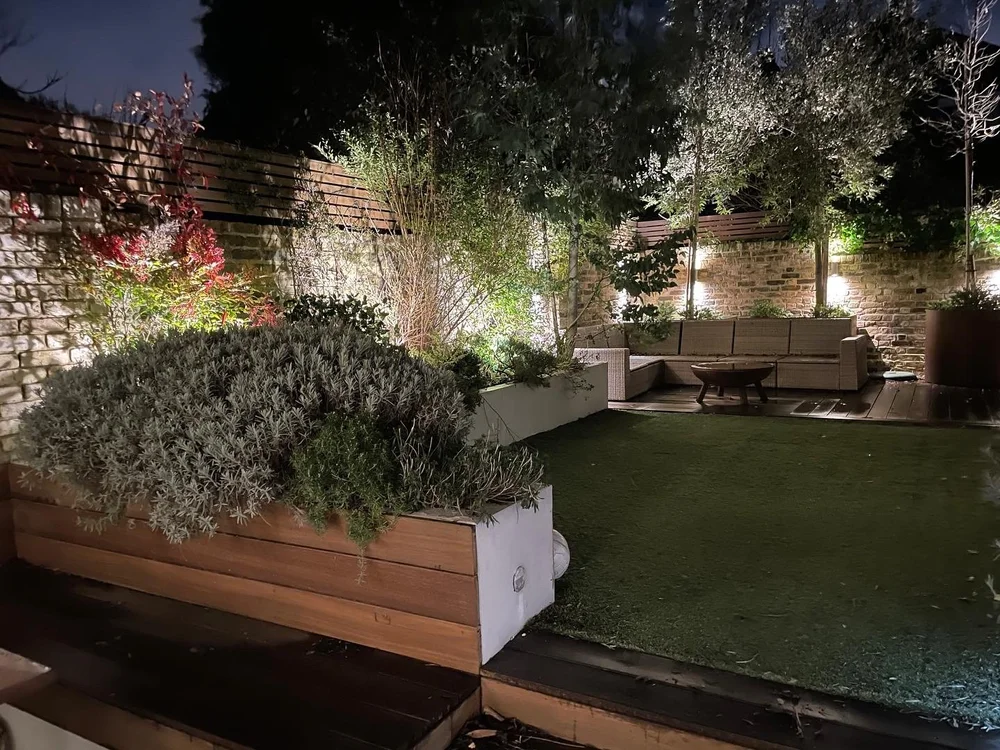
Warm-white LED lighting around 2700–3000K is often flattering to brick, planting and timber. Shield luminaires and aim beams onto the intended surface; avoid lighting bedroom windows or sending unnecessary light into the night sky.
3. Light routes, steps and changes in level
Path markers, downward-facing fittings and carefully positioned step lights help people navigate without excessive brightness. Staggering lights can look more natural than placing identical fittings opposite each other.
4. Specify the right voltage and driver
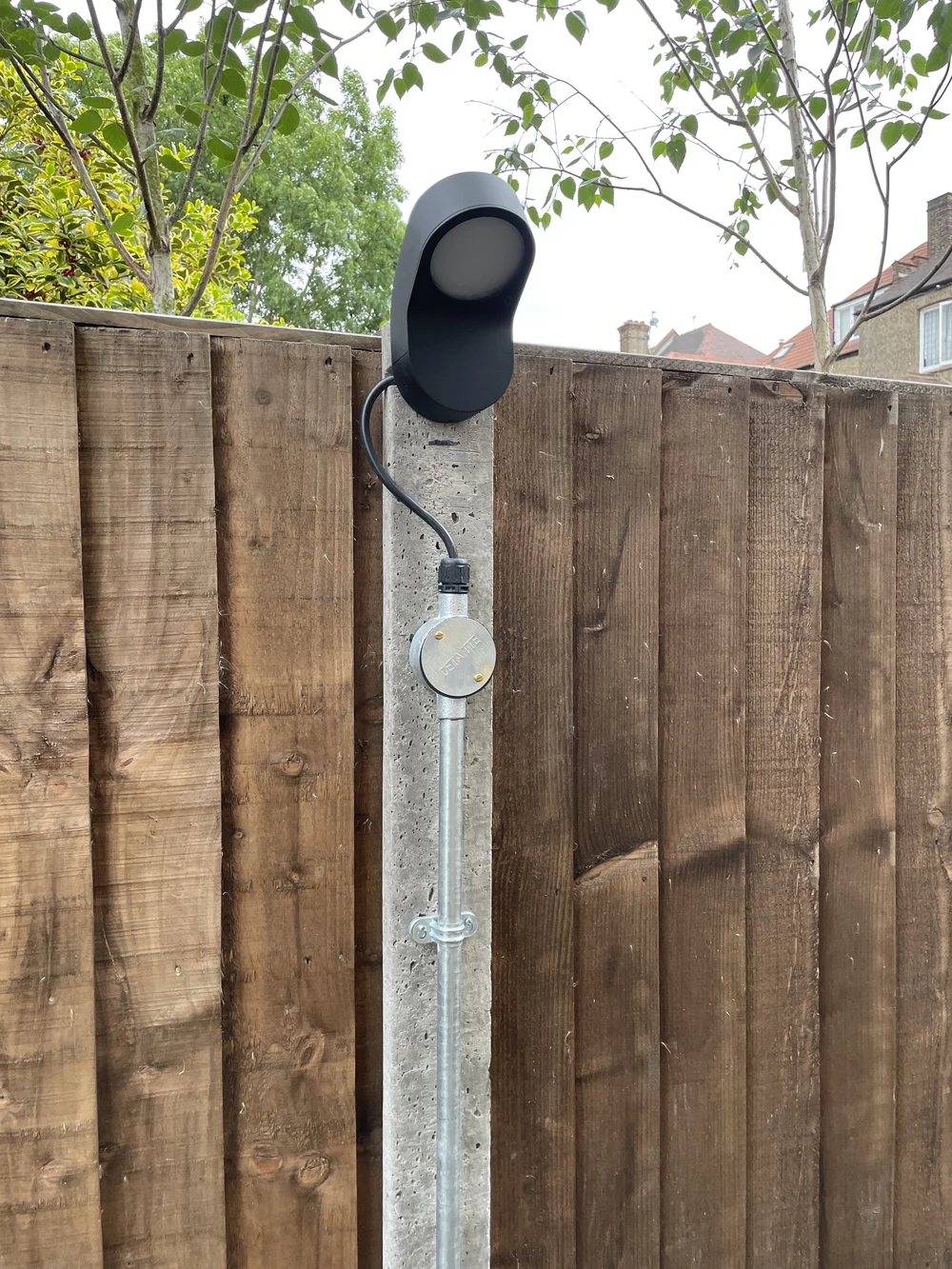
For many accessible planting-bed and path-lighting installations, we favour suitably designed 12V or 24V SELV LED systems over direct 230V fittings. The correct power supply, cable sizing and voltage-drop calculations matter as much as the luminaire.
5. Design for moisture and maintenance
External connectors, cable entries and enclosures need appropriate environmental and mechanical protection. A high IP rating alone does not compensate for inadequate drainage or poorly made underground joints.
Plan access to power supplies and drivers before paving or planting is complete.
6. Use efficient controls and sensible zones
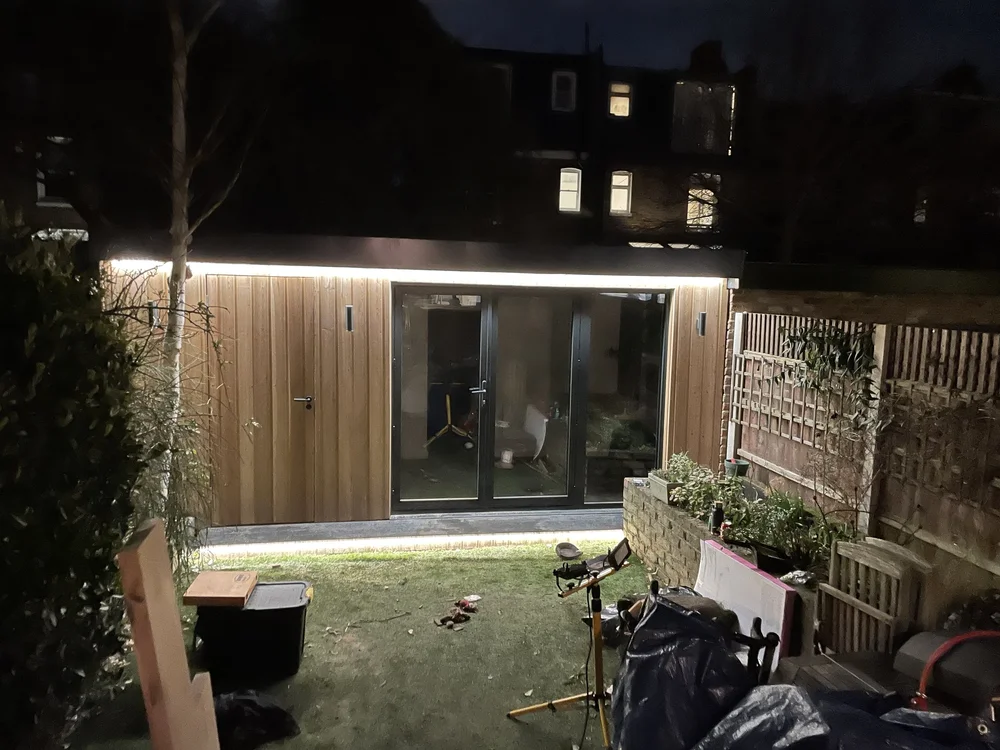
Divide lighting into functional circuits or zones: routes, seating, planting and security. Timers, photocells or compatible smart controls can limit operating hours and reduce light spill.
12V, 24V or 230V: which is best outdoors?
UK mains supply is nominally 230V AC (often casually called “240V”). Lower-voltage systems are typically driven from a suitable mains-fed power supply. Our default preference for accessible landscape lighting is a well-designed SELV system, not because mains lighting is banned, but because it can reduce the consequences of damage to the secondary wiring or luminaire.
Useful for short runs and compatible small fittings. Higher current than 24V at the same load means voltage drop needs particular attention.
Often the better option for extended low-voltage LED runs, with approximately half the current of a comparable 12V system.
Permitted outdoors when correctly designed and installed; appropriate for selected fixed fittings, but introduces mains-voltage exposure at the equipment and cabling.
Technical note: Relevant BS 7671 considerations include Section 714 (external lighting installations), Section 715 (extra-low-voltage lighting installations where applicable), Regulation 522.8.10 (buried cables) and applicable requirements for automatic disconnection, RCD protection and selection of equipment for external influences. Design and product instructions determine the final arrangement.
Garden lighting FAQs
Common questions we discuss when planning or upgrading outdoor lighting in South London.
What is the difference between 12V, 24V and 230V garden lighting?
12V and 24V garden luminaires are supplied through a suitable power supply or driver. When designed as a SELV system, the accessible secondary circuit is separated from mains and operates at extra-low voltage. 230V lighting operates directly at mains voltage and requires appropriately rated luminaires, wiring, accessories and fault protection. All three can be used outdoors when designed correctly.
Why does NOD generally recommend 12V or 24V rather than 230V in gardens?
For accessible planting beds, borders and paths, correctly designed SELV lighting reduces the electric-shock risk if a fitting or secondary cable is damaged. It also suits small, repositionable LED fittings and can simplify future alterations. It does not eliminate the need to protect the mains feed to the driver or install the secondary cabling properly.
Is 230V garden lighting unsafe or prohibited?
No. Properly specified and installed 230V outdoor lighting is permitted by BS 7671. We usually favour SELV for accessible landscape lighting, but 230V may be appropriate for certain fixed wall lights, floodlights or longer routes. The choice depends on the location, equipment, installation method and protective measures.
Is 24V better than 12V?
Often for longer LED lighting runs. At the same wattage, 24V typically draws half the current of 12V, giving lower voltage drop for the same cable and route. However, fittings and drivers must match the selected voltage, and the actual circuit design and manufacturer limits still govern cable sizes and distances.
Can I use a normal 12V transformer for garden LEDs?
Not automatically. LED products may require a regulated constant-voltage power supply or a constant-current driver; 12V AC, 12V DC and 24V DC products are not interchangeable. The power supply must match the fittings, load, dimming arrangement and environment.
Does low voltage mean the cables can be laid loose in soil?
No. SELV cabling still needs protection against damage, moisture and deterioration. Cable construction, joints, connectors, routing and mechanical protection must be suitable for external conditions. Any buried mains cables require particular consideration of depth, identification and mechanical protection.
What IP rating should garden lights have?
It depends on where they are installed. For example, a sheltered wall fitting, exposed path light and a recessed fitting subject to standing water have different environmental demands. IP65 is a common choice for exposed luminaires, but it is not a blanket requirement or a guarantee that a product is suitable for immersion or poorly drained ground.
Do garden lights need an RCD?
The mains circuit and outdoor equipment must be assessed against the applicable BS 7671 requirements. For example, socket-outlets rated up to 32A generally require 30mA additional RCD protection under Regulation 411.3.3, subject to the stated exceptions. Other requirements depend on the circuit, wiring system and installation. An SELV secondary does not replace protection required on the 230V primary.
Can existing garden lighting be upgraded to LED?
Often yes, but the existing cables, fittings, joints and power supplies need assessment. A retrofit should not reuse water-damaged connectors or mix incompatible voltages and driver types.
How do you stop garden lights dazzling neighbours or lighting the sky?
Use shielded or downward-facing fittings, careful beam angles, warm colour temperatures (often 2700–3000K), zoning, dimming and timers. Focus light onto steps, paths, planting and architectural features rather than neighbouring windows or the sky.
Can garden lighting be controlled from a phone or timer?
Yes. Appropriate smart controls, photocells, astronomical timers and scene controllers can switch or dim garden lighting. Compatibility must be checked with the selected driver and luminaire, especially for dimmable LED systems.
Can you add lighting without excavating the whole garden?
Sometimes. We can assess existing cable routes, walls, beds and hard landscaping, then propose a design that minimises disruption. Any new buried cable route must still achieve suitable protection and maintainability.
Outdoor lighting inspiration from the original article
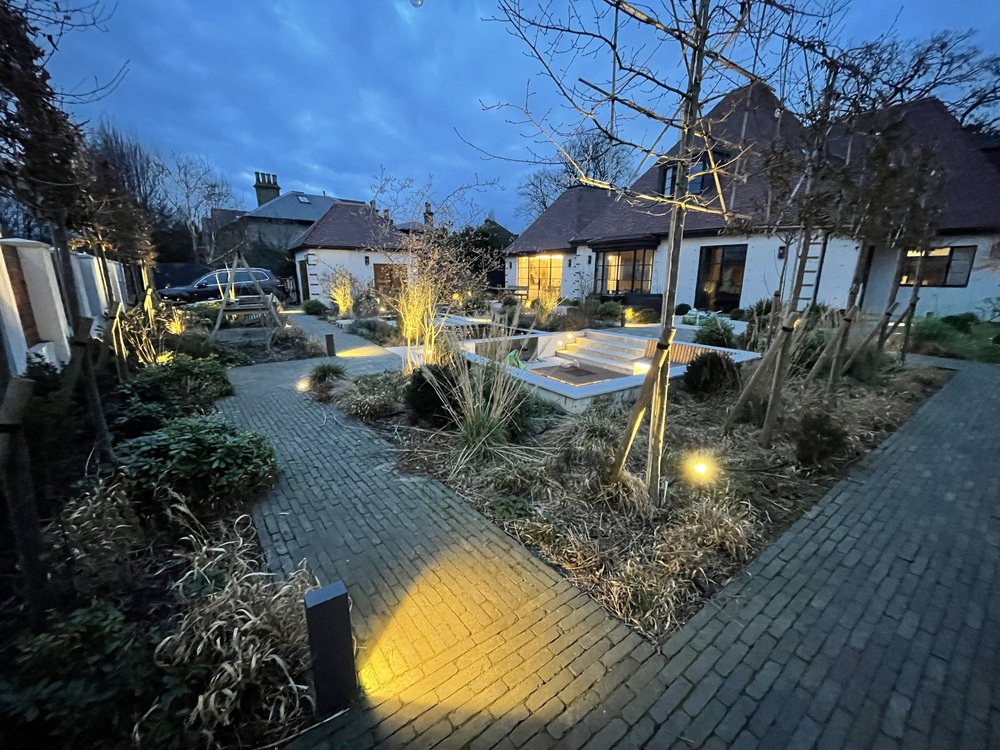
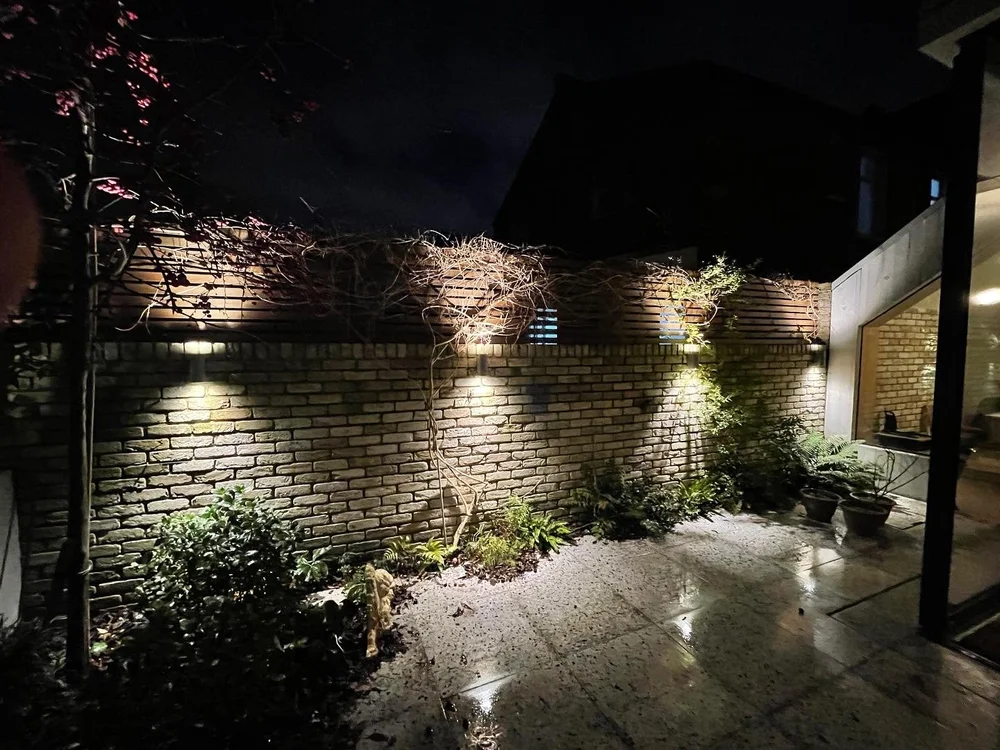
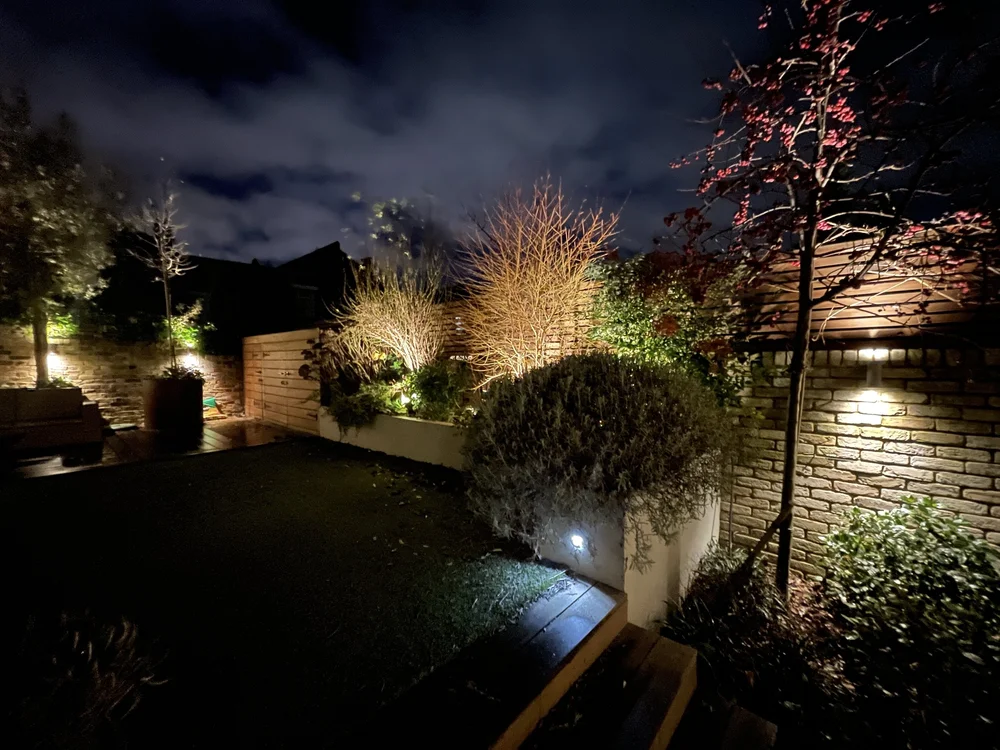
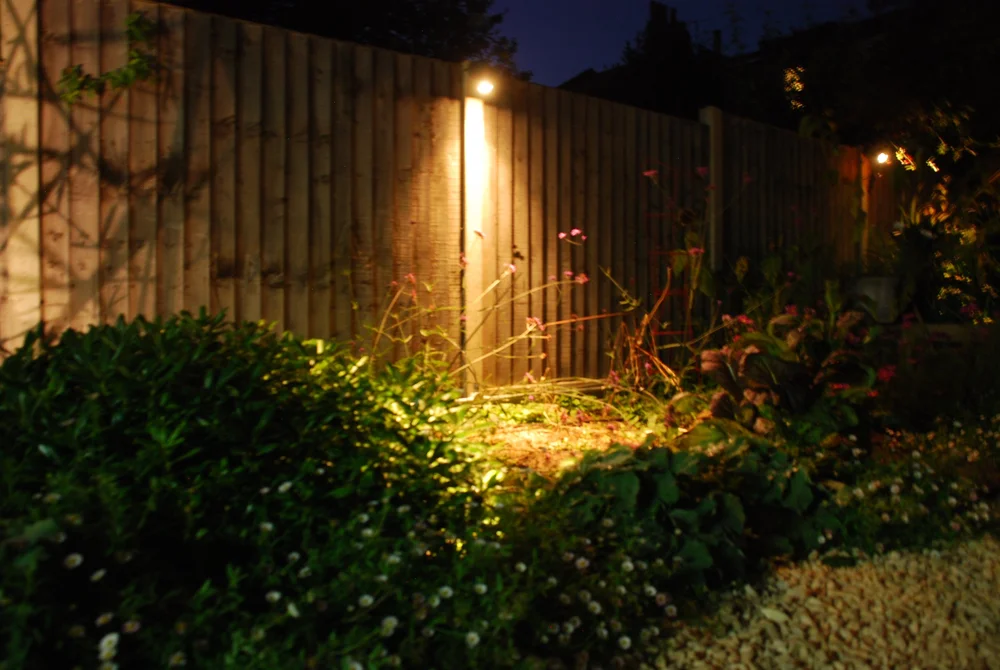
These photographs are reused from the garden lighting article already published on the NOD website. They can be replaced later with more specific project captions.
Related electrical services and advice
Planning garden lighting?
NOD Electrical Services designs and installs outdoor lighting for homes and commercial premises across South London. We can assess suitable voltages, routes, fittings and controls to produce a maintainable lighting scheme.
Request an estimateView recent projects